








WORLDWIDE SHIPPING
Check eligibility and delivery details

RETURNS INFORMATION
Review the current return terms

CUSTOMER SUPPORT
Contact our team for product and order help

SECURE CHECKOUT
Protected payment and checkout options

















Satellite Messaging Rugged Phones
Review rugged phones with dedicated two-way satellite messaging for remote areas beyond normal cellular coverage.
Satellite Messaging Rugged Phones — Stay in Touch Beyond Mobile Coverage
Who it’s for: Backcountry travelers, expedition teams and remote-site workers can use these phones to add supported satellite messaging to their normal mobile setup. Plan the service and activation before the trip, not after coverage disappears.
A satellite messaging rugged phone can send and receive supported text or emergency messages through a satellite service when compatible terrestrial cellular coverage is unavailable. This is different from ordinary GPS: a phone can receive positioning signals without having hardware or service to transmit a satellite message.
The current collection contains the Blackview XPLORE 2 Satellite, identified in its product information with two-way satellite messaging. Service availability depends on the exact variant, activation, subscription, region, satellite network, message plan and view of the sky.
A Better Communication Plan for Remote Trips
Review the product page and obtain current service details before ordering. Satellite messaging can improve remote communication planning, but no single device, network or SOS feature guarantees a successful rescue.
- Service: confirm network operator, supported countries, subscription and activation process.
- Messaging: check two-way capability, message length, recipients, app and delivery status.
- SOS: understand monitoring provider, response workflow, fees and test procedure.
- Operation: verify antenna orientation, sky-view needs, battery and temperature limits.
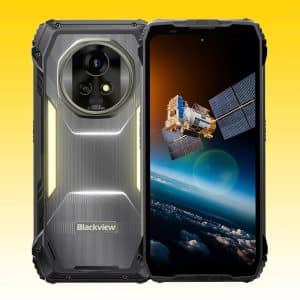
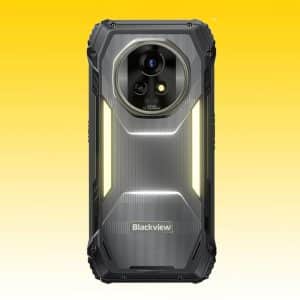
Blackview XPLORE 2 Satellite 5G Rugged Phone with MediaTek Dimensity 8300, 16GB+1TB, 20000mAh, Two-Way Satellite Messaging, Dual 467LM Camping Lights

Satellite Messaging Requires Service and Sky View
Satellite Messaging Is Not Standard GPS
GPS and other navigation systems broadcast signals that phones receive to calculate location. Satellite messaging requires transmission hardware, an enabled service and network access. A normal rugged phone with GPS cannot send satellite messages simply because it can display coordinates.
Coverage, Latency and Obstructions
Mountains, buildings, dense tree cover, canyons, vehicles and indoor use can block or delay communication. Messages may take longer than cellular texts. Follow the device instructions for antenna orientation and remain in a clear area until delivery is confirmed.
Emergency Planning
Set up the account before travel, test only through the provider’s approved method, keep emergency contacts and trip details current, and carry backup communication and navigation appropriate to the risk.
Before Choosing a Satellite Phone
- Confirm the exact satellite-enabled hardware variant and supported service.
- Check coverage maps, country restrictions, subscription cost and message allowance.
- Understand SOS monitoring, response partners and potential third-party rescue costs.
- Test activation, messaging and battery before leaving cellular coverage.
The Blackview XPLORE 2 Satellite also includes a very large battery and camping lights, but those features do not change network coverage. Compare it with mega battery and camping light rugged phones for related field requirements.
Representative models: Blackview XPLORE 2 Satellite 5G Rugged Phone.
Plan Remote Messaging Before the Signal Disappears
This collection helps you compare phones built for supported satellite communication alongside normal cellular use. We put service, activation and operating conditions near the hardware discussion because they determine whether the feature is ready when a trip begins.
Share your destination and messaging needs with us. We can help you narrow the handset options, while you prepare the service plan, contacts and pre-trip test that complete the setup.

Satellite Messaging Rugged Phones FAQs
It is a rugged phone with compatible hardware and service for sending supported messages through a satellite network beyond normal cellular coverage.
No. GPS helps a phone calculate location by receiving signals. Satellite messaging also requires transmitting hardware, activation and service.
No. Coverage depends on network, region, regulations, subscription and sky view. Check the provider’s current coverage map.
Usually a service plan or activation is required. Confirm fees, renewal, included messages, overages and emergency terms for the exact product.
The supported workflow varies. Messages may use a dedicated app, format, recipient method or character limit rather than standard carrier SMS.
Reliable transmission normally needs a clear view of the sky. Buildings, roofs, metal and terrain can block the signal.
Delivery can be slower than cellular messaging and depends on sky view, network availability and satellite position. Wait for confirmation.
Treat SOS as one part of your emergency plan. Learn what information the service shares, keep the phone charged and use the feature only for a genuine emergency; terrain, weather and local response resources can affect timing.
Use only the provider’s approved test method. Never trigger a real emergency alert as a test.
Repeated acquisition and transmission can consume power, especially with poor sky view. Start with a charged phone and carry backup power.
No. Verify the exact Satellite hardware variant and service support; a projector or night-vision variant should not be assumed to include satellite messaging.
Activate the service, send test messages from an open area, save key contacts and show your travel partner how the app and SOS workflow operate. Also carry a route plan and an independent backup appropriate to the trip.
A USER PERSPECTIVE