





WORLDWIDE SHIPPING
Check eligibility and delivery details

RETURNS INFORMATION
Review the current return terms

CUSTOMER SUPPORT
Contact our team for product and order help

SECURE CHECKOUT
Protected payment and checkout options
















Thermal Imaging Rugged Phones
Compare integrated thermal cameras, rugged protection, 5G connectivity, battery life and field-ready features for HVAC, electrical, building and mechanical inspections.
Thermal Imaging Rugged Phones — Spot Heat Patterns and Keep Working
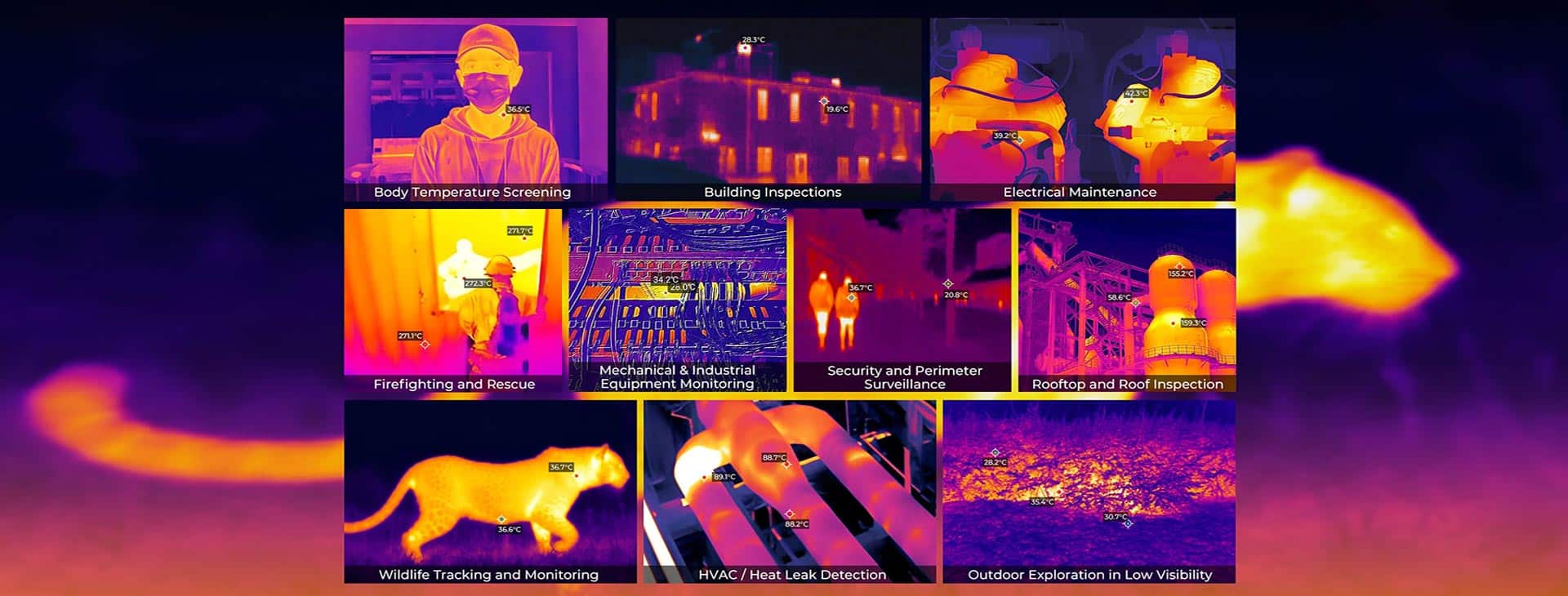
Who it’s for: HVAC technicians, electricians, maintenance teams, building inspectors and outdoor users can quickly scan, save and share heat patterns from one device. Choose around the detail and measurement tools your everyday jobs actually need.
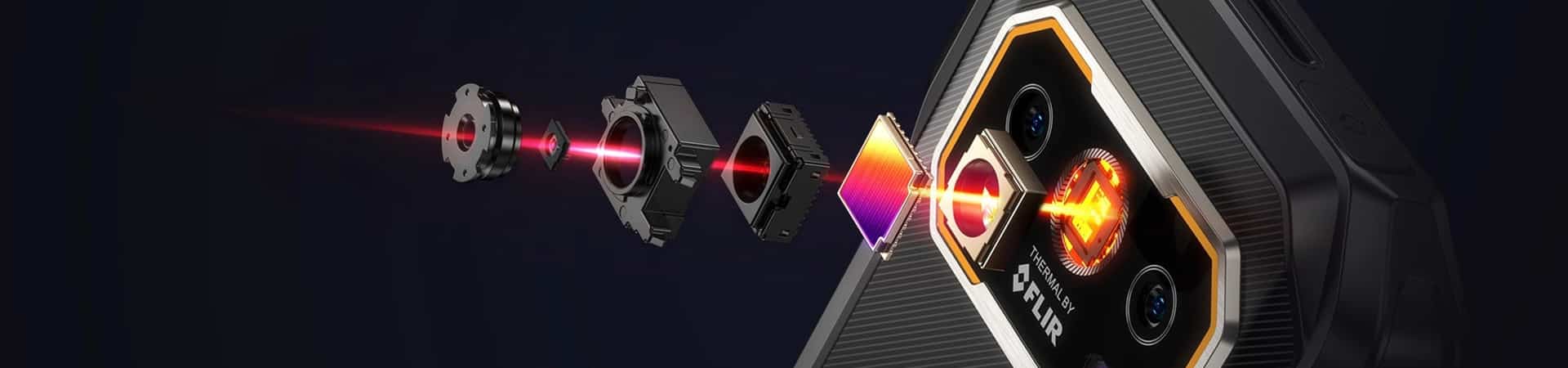
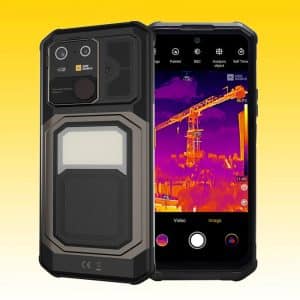
Thermal imaging rugged phones combine an Android smartphone, a built-in infrared thermal camera and a reinforced body in one field-ready device. They visualize surface-temperature differences that an ordinary phone camera cannot see, helping technicians and outdoor professionals find unusual heat patterns, capture evidence and communicate from the same handset.
A thermal camera phone is useful for fast, preliminary checks in HVAC systems, electrical panels, mechanical equipment, plumbing, building envelopes, vehicles and outdoor environments. It does not see through walls, and it is different from infrared night vision: night vision helps form a visible image in darkness, while thermal imaging maps emitted infrared energy as apparent temperature differences.
One Phone for Thermal Checks, Photos and Field Communication
Here you can compare rugged smartphones with thermal imaging built in, ready for a quick heat check without attaching another sensor. Compare current models from Ulefone, OUKITEL, AGM, Blackview, DOOGEE, IIIF150, OSCAL and CONQUEST. Every model links to its own product page so you can check the thermal module, Android version, memory, battery, charging, dimensions, weight, network bands, stock and current price.
- Integrated workflow: scan, save, annotate and share from one thermal imaging smartphone.
- Field durability: review the model-specific IP rating, drop-test information and operating limits rather than assuming every rugged phone has identical protection.
- Connectivity: choose 4G or 5G according to your carrier and region; confirm supported bands before ordering.
- Usable runtime: compare battery capacity, charging speed and the extra power required by the thermal camera, GPS, high screen brightness and mobile data.
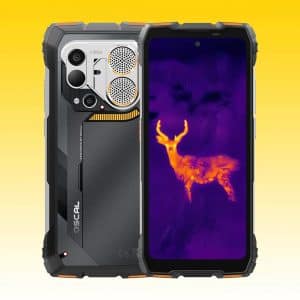
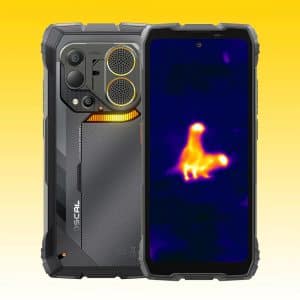
OSCAL PILOT 6 Thermal Imaging Rugged Smartphone with MediaTek Helio G100 Processor, 12GB+256GB Storage, 10000mAh Battery, 108MP Main Camera
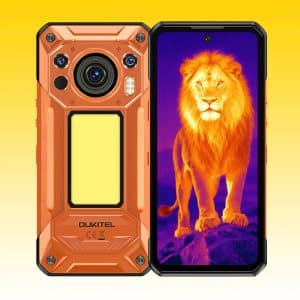
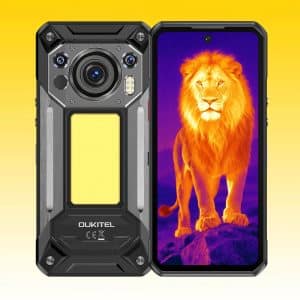
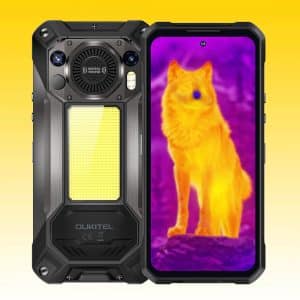
OUKITEL WP500 Ultra 5G Thermal Imaging Rugged Smartphone with MediaTek Dimensity 8300 Processor, 12GB+1TB Storage, 10000mAh Battery, 108MP + 8MP Night Vision Camera
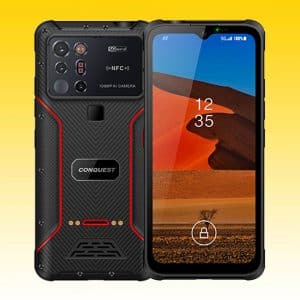
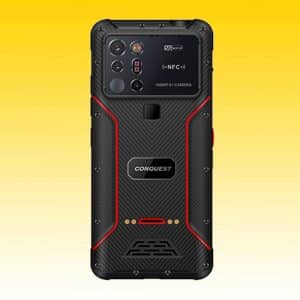
CONQUEST S23 Thermal 5G Rugged Smartphone with Dimensity 900, 12GB+256GB, 10000mAh, 108MP Camera, 20MP Night Vision, 66W Fast Charging
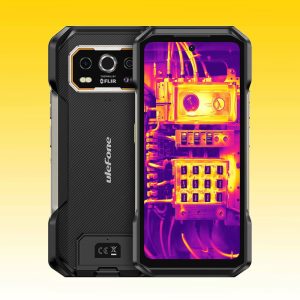
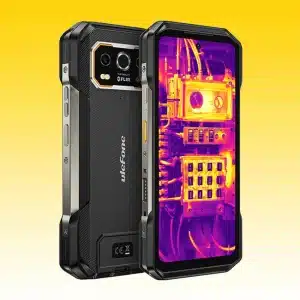
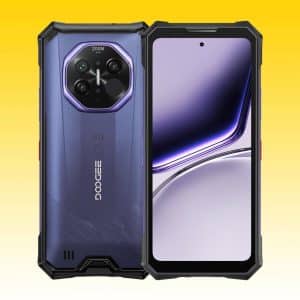
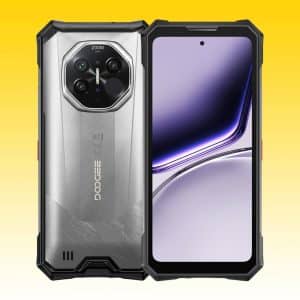
DOOGEE S300 Plus Thermal 5G Rugged Phone with MediaTek Dimensity 8300 Processor, 12GB + 1TB, AI 1440×1080 Thermal Imaging, 11000mAh Battery, 66W Fast Charging
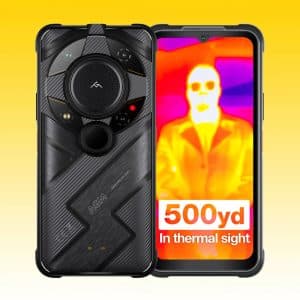
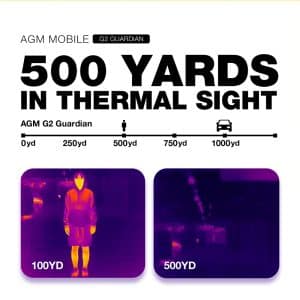
AGM G2 Guardian 5G Thermal Imaging Rugged Smartphone with Qualcomm QCM6490 Processor, 12GB+256GB Storage, 7000mAh Battery, 6.58″ FHD+ 120Hz Display
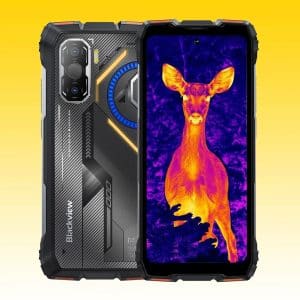
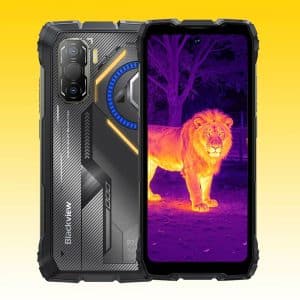
Blackview ROCK 3 Thermal Imaging Rugged Smartphone with MediaTek Helio G100 Processor, 8GB+256GB, 10000mAh Battery, 6.78″ FHD+ 120Hz Display
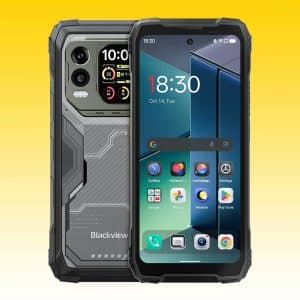
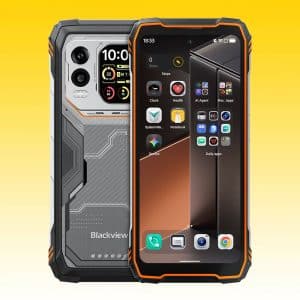
Blackview XPLORE 1 Pro 5G Thermal Imaging Rugged Phone with MediaTek Dimensity 7050 Processor, 16GB+512GB, 20000mAh Battery, 6.78″ FHD+ 120Hz Dual Display
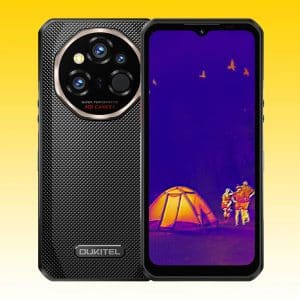
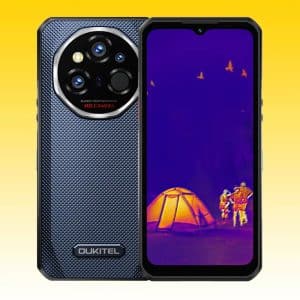
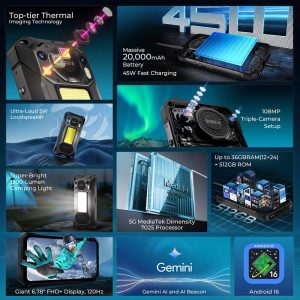
OUKITEL WP55 Ultra 5G Thermal Imaging Rugged Smartphone with MediaTek Dimensity 7025 Processor, 16GB+ 512GB, 6.6″ FHD+ 120Hz Display, 11000mAh Battery
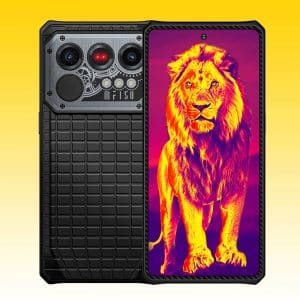
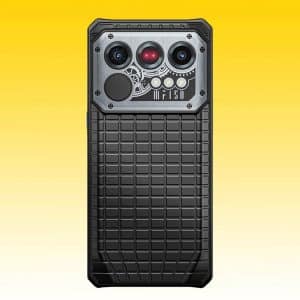
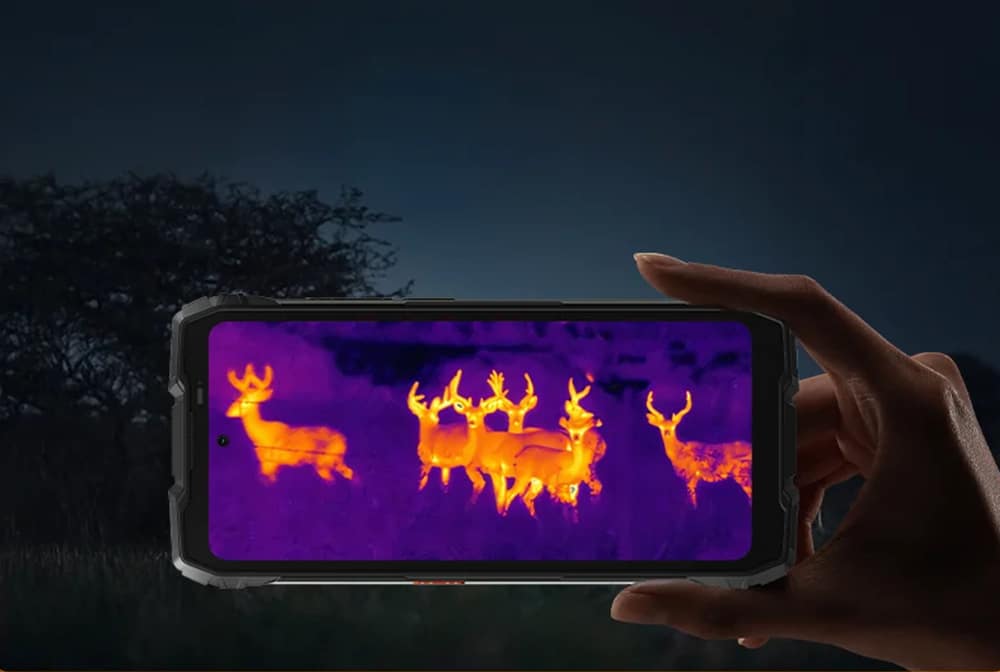
How Thermal Camera Phones Help in the Field
How a Thermal Camera Phone Works
A rugged phone with a thermal camera detects infrared radiation from surfaces and converts those measurements into a color image called a thermogram. Warmer and cooler areas appear as contrast, which can help locate a hot connection, an overloaded component, uneven heating, missing insulation or a possible moisture-related pattern that needs further investigation.
Thermal Imaging vs. Infrared Night Vision
These are separate technologies. A thermal imaging smartphone visualizes heat patterns in light or darkness. An infrared night vision camera illuminates a dark scene and records a conventional monochrome-style image, but it does not provide a temperature map. Some phones include both features; this page lists a model only when thermal imaging is integrated.
Temperature readings are affected by emissivity, reflected temperature, distance, viewing angle and environmental conditions. Shiny metal is especially difficult to measure correctly. For measurement fundamentals, consult the FLIR guide to accurate thermography and follow the selected phone product instructions.
Choose the Best Thermal Imaging Rugged Phone for Your Work
The best thermal camera rugged phone is the one whose detector, measurement range, battery, size and connectivity fit the task. Start with the inspection target and required evidence, then compare the complete phone rather than choosing from a single headline number.
Match the Phone to the Inspection Scenario
- Electrical and industrial maintenance: prioritize thermal detail, measurement tools, manageable size and a clear display. Consider the Ulefone Armor 28 Ultra Thermal, AGM G3 Pro or DOOGEE S300 Plus Thermal, then verify each specification.
- HVAC, plumbing and building inspection: look for useful temperature-span coverage, easy image capture and enough battery for a full route. Compare the Blackview ROCK 3 Thermal, OUKITEL WP55 Ultra and OSCAL PILOT 6.
- Remote work and long shifts: balance battery capacity against phone weight and charging time. The OUKITEL WP61 Ultra, Blackview XPLORE 1 Pro and Ulefone Armor 29 Pro Thermal are large-battery options to compare.
Match the Thermal Camera to the Inspection
- Confirm that the phone has integrated thermal imaging, not only night vision or a plug-in accessory.
- Check the exact variant, thermal specifications, supported bands, SIM configuration and carrier compatibility.
- Review dimensions and weight if the device will be carried or used one-handed for long periods.
- Check live stock, configuration details, estimated delivery and the product-page specification table.
Important: a phone-based thermal camera can support screening, documentation and troubleshooting, but it does not automatically replace a calibrated professional instrument, qualified inspection, workplace procedure or safety isolation. Never use a phone as the sole basis for a medical diagnosis, electrical safety decision, fire response or hazardous-area approval.
Thermal Phones Selected for Real One-Device Convenience
We bring integrated thermal models together so you can compare the detector and the everyday phone as one tool. That means less time sorting past night-vision phones, plug-in modules and tablets when you specifically want a pocketable thermal handset.
Start with the smallest heat pattern you need to see, then consider app tools, battery and body weight. Our team can help you turn those priorities into a shorter, more useful list.
Thermal Imaging Rugged Phone FAQs
A thermal imaging rugged phone is an Android smartphone with an integrated infrared thermal camera and a reinforced body. It displays surface-temperature differences as a thermogram while also providing normal phone functions such as calls, apps, GPS, cameras and mobile data.
Common uses include preliminary HVAC checks, electrical-panel screening, mechanical maintenance, plumbing and building inspections, vehicle troubleshooting and outdoor observation. The image can reveal an unusual heat pattern that should be investigated with the correct procedure and instruments.
No. A thermal camera mainly detects infrared energy emitted or reflected by the visible surface. It may show a surface-temperature pattern associated with insulation, air leakage, moisture or a hidden heat source, but it does not provide a view through the wall.
No. Thermal imaging maps heat patterns and can work in light or darkness. Infrared night vision illuminates a dark scene to form a conventional image; it does not create a temperature map. This collection includes only phones with integrated thermal imaging.
Accuracy varies by sensor, measurement range, calibration, target emissivity, reflected temperature, distance, angle and environment. Check the model’s stated accuracy conditions and use the product’s measurement guidance. For critical work, verify results with a suitable calibrated instrument.
Compare native detector resolution, thermal sensitivity or NETD, temperature range, stated accuracy, field of view, focus, refresh rate and software measurement tools. Also compare the phone’s battery, display, weight, storage, bands and charging.
Higher native thermal resolution can reveal finer patterns, but it is only one factor. Sensitivity, optics, focus, software, temperature range, ergonomics and measurement conditions also matter. Check whether a listed resolution is native or software-enhanced.
It can help screen for abnormal heat patterns and document observations, but safe electrical work requires proper training, personal protective equipment, approach boundaries and site procedures. Do not treat a phone image as the sole safety decision or proof that equipment is safe.
Thermal imaging, maximum screen brightness, GPS, 5G and continuous recording increase power use. Actual runtime depends on the model and work pattern, so compare battery capacity and charging speed and plan a field charging option for long shifts.
Look for a clear thermal app, quick image capture, enough battery for repeated scanning and a body you can comfortably hold. A high-end detector is valuable, but smooth everyday handling keeps the tool useful from the first job to the last.
No phone is guaranteed to support every carrier or region. Open the exact product page, check its 4G and 5G bands and confirm compatibility with your carrier before ordering. Network approval and features such as VoLTE can vary.
Choose more detector detail when you inspect smaller targets or work from farther away. Choose extra battery when routes are long and charging is scarce. If both matter, expect a larger device and compare weight before deciding.
A USER PERSPECTIVE

I've carried a Blackview phone for nearly a year, and it's handled everything from heavy rain to muddy job sites without any problems. The battery easily gets me through a full day, and I don't worry every time I put it down on concrete.